For any business aiming to become a trusted supplier to Saudi Aramco, navigating the SACS-002 cybersecurity standard is a critical undertaking. A foundational element of this standard, and indeed any robust cybersecurity framework, is the establishment of clear and comprehensive policies. Among these, the Acceptable Use Policy (AUP) stands out as a cornerstone, specifically addressed by control TPC-1.
Crafting an effective AUP that meets Aramco’s stringent requirements can be a daunting task, especially for Small and Medium-sized Enterprises (SMEs) in Saudi Arabia’s Energy and Construction sectors who may lack dedicated legal or cybersecurity policy teams. This is where NHR Alemtithal’s Aramco Cybersecurity Essentials Kit steps in, transforming a complex challenge into a manageable task.
What is an Acceptable Use Policy (AUP) and Why is it Crucial for SACS-002?
An Acceptable Use Policy (AUP) is a formal document that outlines the rules and guidelines employees must adhere to when using a company’s technology assets. This includes computers, networks, software, internet access, email systems, and any data handled through them.
Aramco’s SACS-002 standard, specifically control TPC-1, mandates that a “Third Party must establish, maintain and communicate a Cybersecurity Acceptable Use Policy (AUP) governing the use of Third Party Technology Assets.”
Why is this so important for Aramco and its suppliers? A well-defined AUP:
- Sets Clear Expectations: It informs employees about their responsibilities and what constitutes acceptable and unacceptable use of company technology.
- Reduces Misuse of Assets: By outlining prohibited activities, it helps prevent actions that could lead to security breaches, data loss, or legal issues.
- Protects Sensitive Information: It guides employees on how to handle company and potentially Aramco-related data securely.
- Forms a Basis for Action: Should an employee violate the policy, the AUP provides a documented basis for disciplinary measures.
- Demonstrates Due Diligence: It shows Aramco that you are serious about cybersecurity and have implemented foundational controls.
The Challenge: Crafting a Compliant AUP From Scratch
Developing an AUP that is both comprehensive and SACS-002 compliant can be a significant hurdle:
- Time-Consuming: Researching best practices and drafting clear, unambiguous language takes considerable time and effort.
- Ensuring SACS-002 Coverage: You need to ensure all aspects of TPC-1 are addressed, including establishment, maintenance, and communication of the policy.
- Legal and HR Considerations: An AUP often has implications that touch upon legal and human resources aspects.
- Clarity for All Employees: The policy must be easily understandable by everyone in the organization, regardless of their technical expertise.
Without the right resources, creating an AUP can feel like navigating a minefield.
AUP Made Easy: How the Aramco Cybersecurity Essentials Kit Helps
Aramco Cybersecurity Essentials Kit is designed to simplify your journey to SACS-002 compliance, and tackling TPC-1 is a prime example. Our kit directly addresses the AUP challenge by providing:
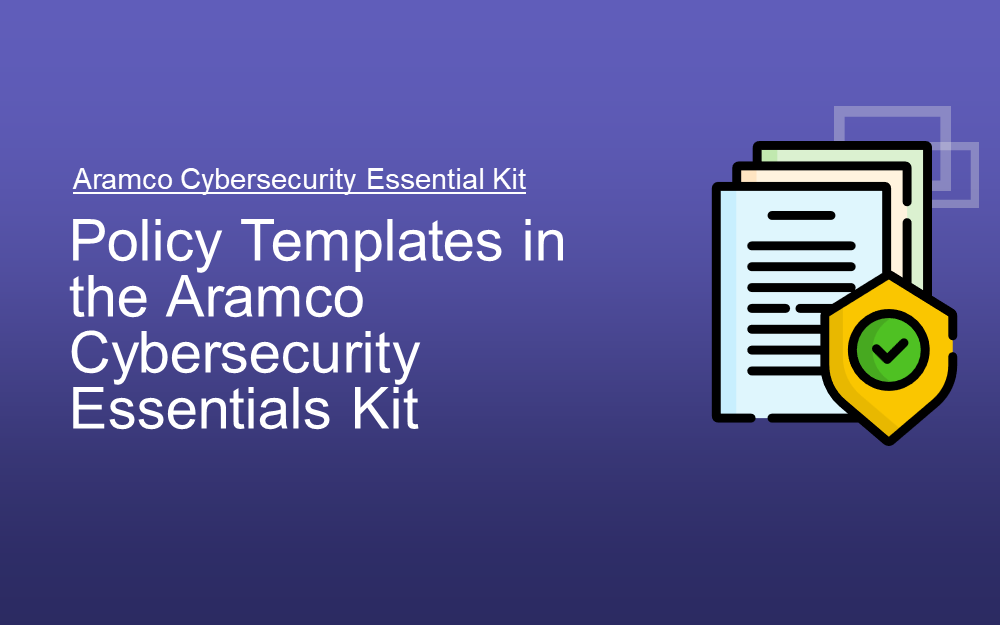
- Ready-to-Use AUP Template: The cornerstone of our solution for TPC-1 is a professionally drafted Acceptable Use Policy template. This isn’t a generic document; it’s specifically structured to align with the requirements of Aramco’s SACS-002 standard.
- Customizable to Your Business: While comprehensive, the template is designed to be easily customized with your company’s logo and any specific operational details unique to your organization. This ensures it’s not just compliant, but also relevant.
- Significant Time & Cost Savings: Imagine the hours your team would spend researching, writing, and reviewing an AUP from scratch, or the cost of hiring external consultants for this specific task. Our kit includes this vital template, saving you valuable time and resources that can be better allocated elsewhere.
- Covers Key TPC-1 Requirements: Our AUP template helps you meet the core stipulations of TPC-1:
- Clearly governs the use of your company’s technology assets.
- Provides a solid foundation for communicating the policy to your employees.
- Facilitates the maintenance and updating of the policy, as implied by the SACS-002 requirement to show different versions and updates if necessary.
- Part of a Holistic Compliance Solution: The AUP template is just one piece of the puzzle. The Essentials Kit provides a complete suite of tools, services, and guidance – including hardware, software, cloud services, security training (TPC-7), and even auditor fees (TPC-20) – to address the full spectrum of SACS-002 controls.
Beyond the Template: Implementing Your AUP Effectively
Having a policy is the first step; ensuring it’s effective is the next. As per TPC-1, the AUP must be “communicated” to employees. Our kit indirectly supports this by:
- Providing a clear document that is easier to share and understand.
- Including security awareness training (TPC-7) where the principles of the AUP can be reinforced.
We recommend integrating your AUP into employee onboarding processes and making it a regular part of cybersecurity awareness discussions.
NHR Alemtithal: Your Partner in Simplified Aramco Compliance
At NHR Alemtithal, we specialize in demystifying cybersecurity compliance for Saudi Arabian SMEs. Our Aramco Cybersecurity Essentials Kit is a testament to our commitment to providing practical, effective, and affordable solutions. We understand the local business landscape and the specific expectations of Aramco.
Make Your AUP (and SACS-002 Compliance) Easier Today!
Don’t let policy writing become a roadblock on your path to becoming an Aramco supplier. The NHR Aramco Cybersecurity Essentials Kit provides the tools and templates, including a robust AUP, to meet TPC-1 and other SACS-002 requirements with greater ease and confidence.
Ready to simplify your policy creation and fast-track your Aramco compliance?
Learn More About the Aramco Cybersecurity Essentials Kit and Get Your AUP Template! With NHR Alemtithal, achieving SACS-002 compliance, starting with a solid Acceptable Use Policy, is no longer an insurmountable challenge.